
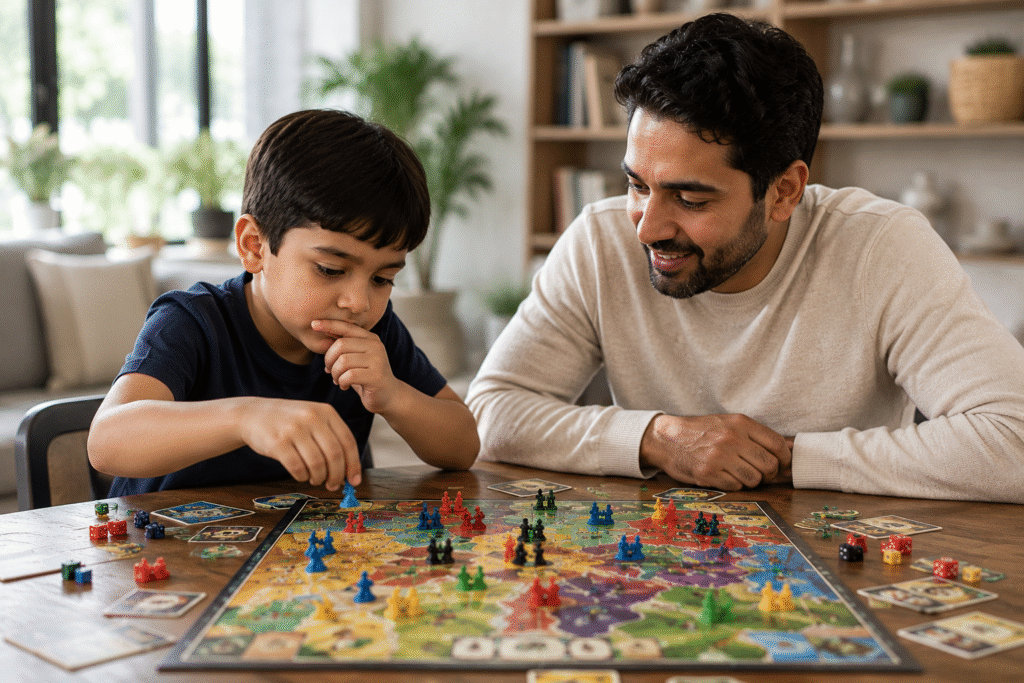
Critical thinking is one of the most valuable skills children can develop. It helps them analyze situations, evaluate options, solve problems, and make informed decisions. While schools play an important role in building these abilities, learning doesn’t stop in the classroom. Everyday activities can also contribute to a child’s cognitive development, and board games are among the most effective examples.
For many families, board games are simply a source of entertainment. However, beneath the fun and friendly competition lies an opportunity for children to practice important thinking skills in a relaxed and engaging environment. From planning to adapting strategies, board games encourage young minds to think more deeply about the choices they make.
What Is Critical Thinking?
Critical thinking involves more than finding the right answer. It is the ability to assess information, identify patterns, consider consequences, and make decisions based on logic rather than impulse.
Children use critical thinking when they:
- Solve problems
- Compare different options
- Predict possible outcomes
- Evaluate risks and rewards
- Learn from mistakes
These abilities become increasingly important as children progress through school and encounter more complex challenges in everyday life.
Encouraging Strategic Decision-Making
Many board games require players to make decisions that affect future outcomes. Instead of acting randomly, children must consider their options and choose the approach that gives them the best chance of success.
For instance, in strategy-based games, players often need to decide whether to take an immediate advantage or save resources for a larger reward later. This process teaches children to think ahead and weigh the potential consequences of their actions.
Over time, repeated exposure to these situations can strengthen decision-making skills and encourage more thoughtful problem-solving.
Teaching Cause and Effect
One of the most effective ways children develop critical thinking involves understanding how actions lead to consequences.
Board games provide immediate feedback. A strong move may improve a player’s position, while a poor decision can create new challenges. Because children can see the results of their choices in real time, they begin to understand the relationship between decisions and outcomes.
This hands-on learning experience often makes lessons more memorable than theoretical explanations alone.
Improving Problem-Solving Skills
Every board game presents obstacles that players must overcome. Whether it’s finding the best route, managing limited resources, or responding to an opponent’s strategy, children are constantly faced with problems that require solutions.
Rather than being given answers, they must analyze the situation and determine the best course of action independently.
Developing Patience and Focus
Critical thinking often requires concentration. Children need time to observe, process information, and make informed decisions.
Many board games encourage players to slow down and think before acting. Waiting for turns, paying attention to changing game conditions, and tracking opponents’ moves all require focus.
As children become more engaged in gameplay, they naturally practice maintaining attention for longer periods, an ability that can benefit them in both academic and social settings.
Learning Through Mistakes
Failure is a natural part of learning, and board games provide a safe environment where mistakes become valuable lessons.
When a strategy doesn’t work, children have the opportunity to reflect on what happened and adjust their approach in future rounds. This encourages resilience and helps them understand that setbacks can be growth opportunities.
Instead of fearing mistakes, they begin to view them as part of the learning process.
Strengthening Communication and Reasoning
Many games involve discussion, negotiation, or explaining decisions to other players. These interactions encourage children to organize their thoughts and communicate their reasoning clearly.
When children explain why they made a certain move or defend a strategy, they practice logical thinking and learn how to support their ideas with evidence.
These communication skills can be just as valuable as the game itself, especially as children grow and collaborate with others in school and future careers.
Choosing the Right Games
Not every board game develops critical thinking in the same way. Parents can maximize learning opportunities by selecting games that encourage planning, problem-solving, and decision-making.
When choosing a game, consider:
- Age appropriateness
- Complexity of rules
- Opportunities for strategy
- Problem-solving elements
- Level of engagement
Games that challenge children to think ahead and adapt to changing situations often provide the greatest cognitive benefits.
Making Game Time More Meaningful
Parents can enhance the learning experience by discussing gameplay with their children. Asking questions such as “Why did you choose that move?” or “What would you do differently next time?” encourages reflection and deeper thinking.
These conversations help children connect their in-game decisions to real-world problem-solving skills while making family game time even more interactive.
Conclusion
Critical thinking develops through practice, and board games offer an enjoyable way for children to strengthen this essential skill. By encouraging strategic planning, problem-solving, decision-making, and adaptability, these activities provide valuable learning experiences that extend far beyond the game board. Whether played at home, during family gatherings, or with friends, Board Games for Kids can support cognitive development while creating opportunities for meaningful interaction and fun.