
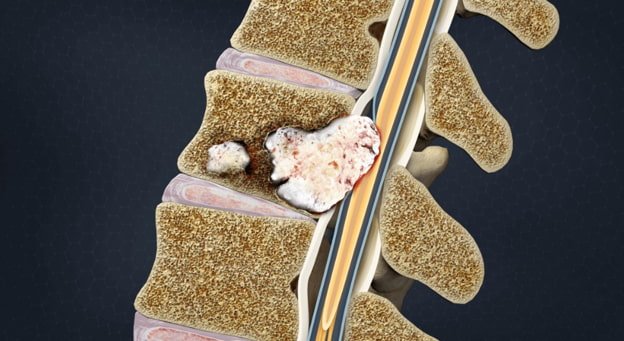
Most back pain follows a recognisable pattern — it worsens with movement and activity, improves with rest, and responds predictably to the conservative management that musculoskeletal pain generally warrants. The back pain that originates from spinal metastases does not follow this pattern, and this difference is one of the more important clinical signals that should prompt urgent investigation rather than watchful waiting. Pain that is present at rest, that is notably worse at night without any positional explanation, and that occurs in someone with a current or previous cancer diagnosis is pain that should not be managed on the assumption that it is mechanical in origin until that assumption has been actively tested and confirmed. The clinical instinct to manage back pain conservatively and observe for improvement is appropriate in most situations — this is not most situations.
Why the Timing of Diagnosis Changes Everything
The range of management options available to a patient with spinal metastases, and the functional outcomes those options can realistically achieve, are directly linked to the stage of neurological involvement at the time the diagnosis is made — and the window between early disease and established neurological compromise is frequently narrower than it appears from outside the situation. A patient whose spinal metastases are identified whilst neurological function remains intact has access to interventions that a patient who presents with established weakness or paralysis does not, because preventing neurological deterioration and reversing it are fundamentally different clinical challenges. The urgency with which suspicious back pain in a patient with cancer history needs to be investigated is not bureaucratic caution — it is the practical recognition that the interventions capable of preventing paralysis need to be applied before paralysis has arrived rather than after.
Staging That Actually Informs the Plan
Metastatic spinal tumours vary enormously in their biological behaviour, local aggressiveness, and response to different treatment modalities depending on the primary tumour type — and this variation means that the same apparent picture of spinal metastatic disease in two different patients may warrant genuinely different management approaches based on factors that accurate staging reveals. Staging that identifies the number of vertebral levels involved, the degree of epidural extension, the relationship between disease and the spinal cord, the structural integrity of affected vertebral bodies, and the biological characteristics of the primary tumour is not a preliminary administrative step — it is the clinical foundation on which a management plan that is specific enough to actually serve the individual patient can be built. Generic approaches applied without this specificity produce results that reflect the approach rather than the person.
What Surgery Is Actually Trying to Achieve
Surgery for spinal metastases is not aimed at curing the underlying cancer, and understanding this distinction changes how both patients and their families evaluate what a surgical recommendation means in this context. The goals of surgical intervention — maintaining or restoring neurological function, stabilising the spine against pathological fracture, and controlling local disease in ways that keep the patient ambulatory and capable of self-care — are goals that significantly affect how a person experiences the remaining course of their illness. Metastatic spinal tumour surgery in appropriate candidates achieves these goals with a consistency that makes it one of the more impactful interventions available, and the identification of those candidates requires the clinical experience that a specialist in spinal oncology brings rather than the general surgical assessment that a less specialised setting provides.
Stereotactic Radiotherapy and What It Has Changed
The precision with which radiotherapy can now be delivered to spinal metastases — with stereotactic body radiotherapy allowing ablative doses to reach the tumour whilst sparing adjacent spinal cord with geometric accuracy that conventional radiotherapy could not approach — has changed the role of radiotherapy in this setting from primarily palliative to genuinely disease-controlling in appropriately selected patients. This is not an incremental improvement in an established technique but a qualitative change in what radiotherapy can accomplish, and the clinical implications of this change are still being integrated into management frameworks that were developed around the capabilities of earlier radiation delivery systems. Centres that have incorporated stereotactic radiotherapy into a coordinated management approach that also includes surgical stabilisation where indicated are producing local disease control outcomes that earlier combined modality approaches could not match.
Ambulation and Why It Matters Beyond Mobility
The ability to walk is not simply a functional outcome in spinal metastatic disease — it is the gateway to independence, to remaining at home rather than in institutional care, to participating in family life, and to experiencing the quality of life that treatment is attempting to preserve. Patients who are ambulatory at the point of specialist assessment have access to a recovery trajectory that patients presenting with established weakness or paraparesis do not, and the specialist interventions available — surgical stabilisation, cement augmentation for fractured or compromised vertebral bodies, targeted radiotherapy, and structured rehabilitation — are all most effective when applied before ambulatory function has been lost rather than after the loss has been sustained and rehabilitation is attempting to recover ground that earlier intervention might have held.
Conclusion
Metastatic spinal tumours present a situation where the quality and the timing of specialist assessment directly determine what outcomes are achievable for the patient, and the consistent finding from specialist centres is that early involvement changes what is possible in ways that later involvement cannot fully recover. The patients who maintain the best function across the course of their illness are almost universally those whose spinal disease was identified and addressed by a coordinated specialist team before neurological deterioration had established itself as the clinical reality being managed rather than the complication being prevented.