
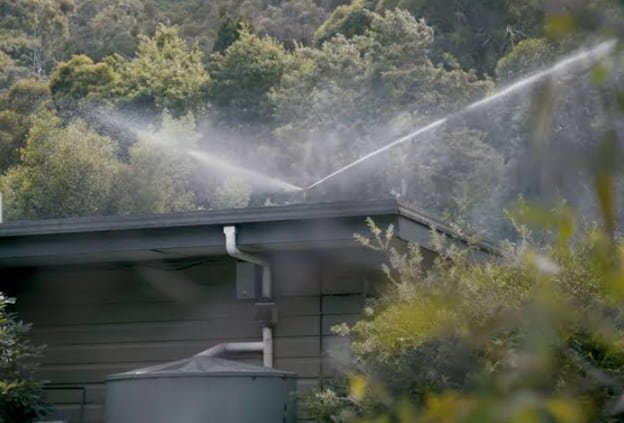
A property owner once said the moment that changed everything for him wasn’t the fire itself; it was watching embers land on his own roof from the driveway. That’s exactly the threat a bushfire protection system is built to answer, quietly, long before flames ever reach the fence line. Nobody thinks about embers the way they think about walls of fire, yet embers are usually what actually take a house down. The strange part is how far ahead of the fire front embers can travel, landing somewhere nobody’s watching—property owners who’ve defended through an actual fire talk about preparation completely differently afterwards.
The Roof That Caught Fire Without Any Flames Nearby
A farmer once described watching the firefront pass a good distance from his property, feeling relieved it hadn’t come close at all. Twenty minutes later, smoke started rising from his own roof, nowhere near where the visible fire had actually travelled. Embers had drifted in well ahead of the front, settling into dry leaf litter caught in his gutters unnoticed. A neighbour with a proper protection system running had wet roofing and gutters throughout that same window, catching nothing at all. That contrast, one roof burning and one staying completely untouched, wasn’t about proximity to the front of the fire whatsoever. It was entirely about which property had something actively working before the embers even arrived overhead.
The Property Where Leaving Wasn’t Actually an Option
A grazier managing several hundred head of cattle couldn’t evacuate during a fast-moving fire, not with animals needing attention and no time to move them. His protection system activated automatically as conditions worsened, wetting down structures while he focused entirely on managing livestock instead. He mentioned afterwards that manually operating pumps during that chaos simply wasn’t realistic; his attention needed elsewhere completely. The automation meant one less thing demanding his focus during genuinely the worst hour of his entire farming life. Emergency services who spoke with him afterwards noted his property required considerably less intervention than others nearby that day. Automatic protection, it turned out, mattered most precisely when human attention couldn’t possibly stretch to cover everything happening simultaneously.
The Forty Minutes Before Anyone Could Reach Them
A rural family lived considerably further from the nearest fire station than most properties in more populated areas. During a serious fire event, they later calculated it took emergency services nearly forty minutes to reach their access road at all. Their protection system had already been running for over half that time, suppressing spot fires around structures before help arrived. The mother mentioned that the waiting period differently than she expected, describing it as tense but not helpless, which surprised her afterwards. Properties without similar systems nearby reported considerably more anxious waits, with owners feeling entirely exposed during that same gap. That difference, tense versus helpless, came down almost entirely to whether something was actively working during those forty minutes.
The Insurance Call Nobody Wanted to Make
A property owner in a high-risk zone received an unexpected call from his insurer questioning his property’s fire protection ahead of renewal. He hadn’t updated his coverage in years, assuming standard measures were sufficient for a property that had never actually burned. The conversation revealed his premium would rise considerably, or coverage could be restricted, without documented protection upgrades completed soon. Installing a proper system resolved the issue entirely, and his following renewal proceeded without a single further question raised. He admitted feeling caught off guard, having never considered that protection systems affected insurance conversations quite this directly. That surprise cost him weeks of stressful negotiation that proactive installation would have avoided completely from the outset.
The Season That Finally Stopped Feeling Unbearable
A rural mother described previous fire seasons as months of constant, low-level dread, checking forecasts obsessively every single morning without fail. After installing proper protection, she noticed herself sleeping through high-risk nights she would have previously spent awake, listening anxiously. Her husband mentioned the same shift, describing the season as manageable for the first time in years of farming that same property. Neither of them expected peace of mind to be the thing they valued most about the entire installation. That relief, more than anything technical about the system itself, became what they mentioned first to other families nearby.
Conclusion
Bushfire risk rarely gives fair warning, which is precisely why so many properties get caught out by embers, not flames. Installing a proper bushfire protection system answers exactly that threat, covering the gap between visible danger and what actually reaches a roof. From ember protection to calmer insurance conversations, the difference shows up in outcomes rather than anything visible on ordinary days. It’s rarely dramatic, more a quiet confidence that something is actively working during the exact hours nobody else can help. Property owners who’ve invested properly describe fewer sleepless nights and considerably steadier seasons, year after year. That protection, working quietly in the background, is usually what people value most only once it’s actually been tested.