
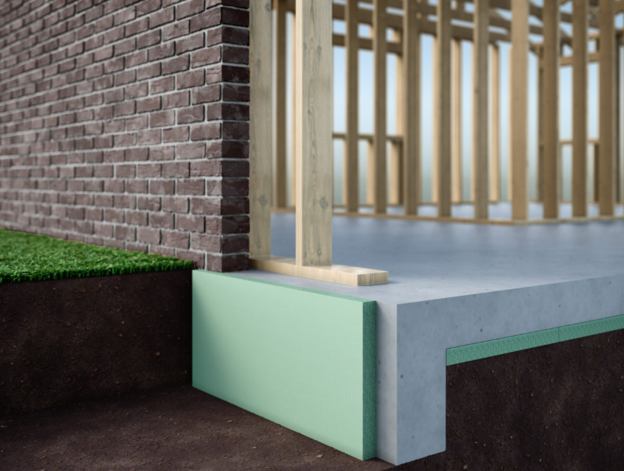
Ask a foreman why he picked XPS foam sheets over half a dozen cheaper boards, and you won’t get a marketing pitch. You’ll get a story about something that went wrong on a different job years back with a different material and a lesson he hasn’t forgotten since. That’s usually how it works on site. Nobody chooses insulation because of a glossy leaflet. They choose it because a wall failed, or a floor sagged, or a roof let water through, and somebody traced the problem back to the wrong board. This isn’t another rundown of insulation values and moisture resistance. Most of that gets repeated everywhere without anyone explaining why it actually matters once the wall’s closed up.
Density Matters Far More Than Thickness
Thickness gets all the attention on a spec sheet. Density doesn’t, and that’s a mistake. A board that’s slightly thinner but properly dense will often outlast a thicker, softer one under a screed. Why? Because soft boards compress. Slowly, almost invisibly, under the weight of furniture or foot traffic, until one day there’s a dip in the kitchen floor nobody can quite explain. Tilers who’ve seen this happen once tend to ask about compressive strength before they ask about thickness. It isn’t the obvious question. It’s the right one.
The Skin Does the Real Work
Slice one of these boards open and there’s a thin, almost glossy layer right at the surface. Easy to ignore. Don’t. That extruded skin does most of the heavy lifting when it comes to keeping water out. Scuff it; score it too deep when cutting; drag it across rough brick on the way to the wall, and the board can look perfectly fine while quietly performing worse than it should. XPS foam sheets depend on that closed surface more than most people realise. Installers who’ve learned this the hard way handle the boards differently. Carefully. Almost protectively.
Where Roofers Actually Use It
Most roofs hide their insulation under the waterproofing, tucked away safely out of the weather. Inverted roofs do the opposite. The insulation sits on top, exposed to rain and standing water for as long as the building stands. Odd arrangement, until you understand why it works here and nowhere else. Few boards can sit permanently wet and still insulate properly. These can. Ask a roofer who specialises in flat roof refurbishment and they’ll bring this up almost immediately, often before the question’s even finished.
A Detail Most Installers Skip
Seams look unimportant. They aren’t. A gap left untapped between two boards becomes a cold bridge, and cold bridges invite condensation exactly where nobody wants it, behind the wall, out of sight, building up slowly. XPS foam sheets get taped at the joints for precisely this reason, though it’s a step that’s easy to rush or skip entirely on a tight schedule. The wall still looks finished either way. The difference only shows up later, usually as a damp patch with no obvious cause.
Why Solvents Are the Enemy
Here’s something that catches people out: not every adhesive plays nicely with this material, and most people never think to check. Solvent-based ones, certain contact adhesives, and some spray foams can quietly soften or degrade the surface before anyone notices anything wrong. The damage sits hidden behind cladding or plasterboard, doing nothing for years until it does something. Manufacturers list compatible adhesives for exactly this reason. Smaller jobs skip the check more often than they should, usually because whoever’s fixing the boards just grabs whatever’s already open in the van, without giving it a second thought. Worth checking first. Always.
Conclusion
None of this shows up in a brochure. It’s the kind of thing tradespeople pick up after watching something fail, then pass on to whoever’s willing to listen, usually over a cup of tea on a wet site visit. Density, surface integrity, joint taping, and adhesive choice – these are what actually decide whether XPS foam sheets perform the way they’re meant to, long after the wall’s been plastered over and forgotten. Anyone specifying this material would do better asking about these details than hearing the same broad claims repeated yet again.